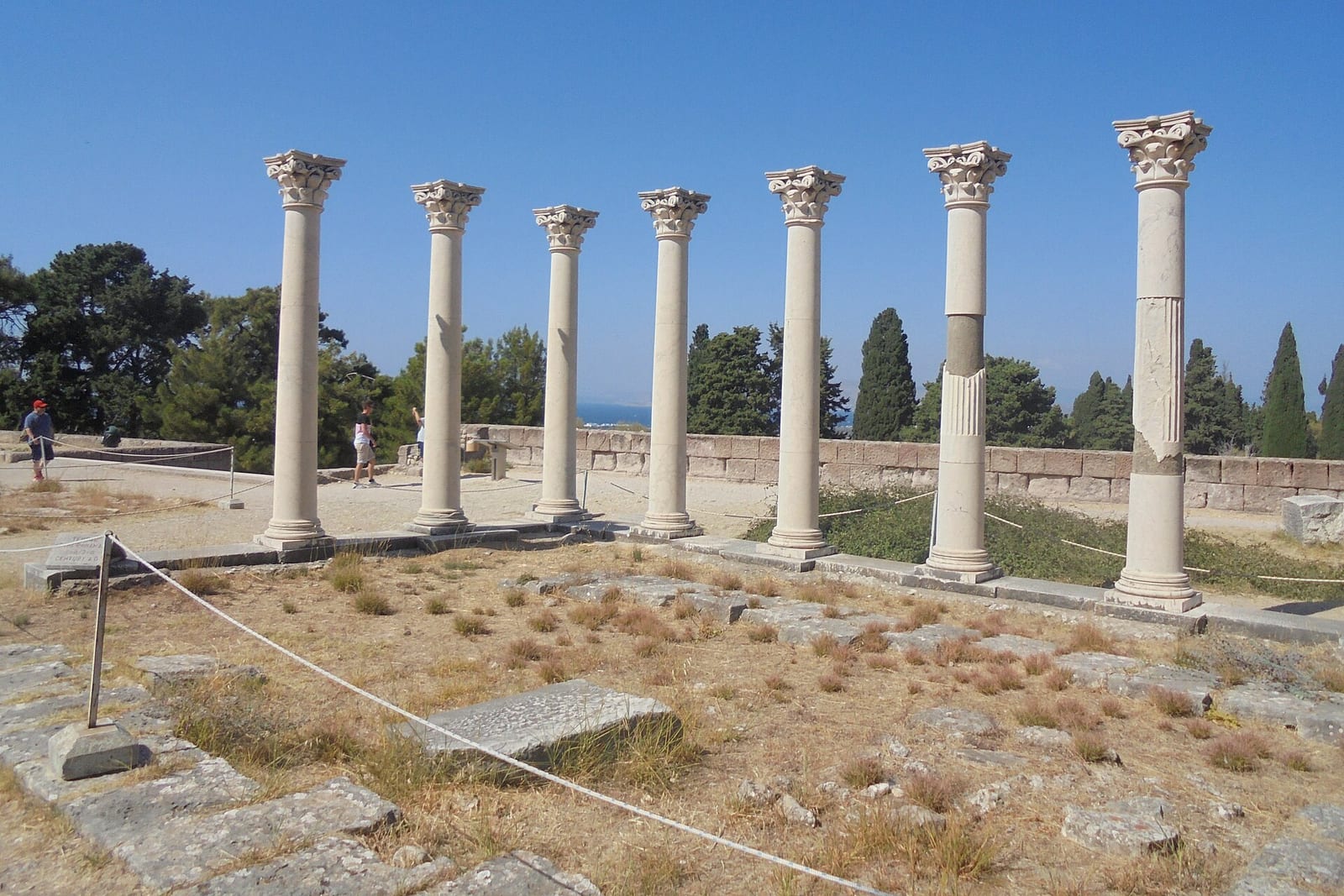
Kos is the Dodecanese's second gateway, flat and bike-friendly, with its own international airport and a town built around a medieval castle and Roman ruins. It suits travelers who want easy cycling, family-friendly beaches, and a base for hopping onward to smaller islands rather than a single dramatic sight.
- Main port
- Kos Town
- Recommended nights
- 2–3
- Best time to visit
- May, Jun, Sep
- Wind & disruption risk
- Moderate
Known for
- Asklepion
- Castle of Neratzia
- Hippocrates Plane Tree
- Kefalos peninsula
- Tigaki beach
Getting there
Ferries dock in Kos Town itself, a short walk from the castle and the harbor promenade. The island has an international airport with scheduled and charter flights, making it a viable second entry point alongside Rhodes. From Kos, fast catamarans reach Kalymnos in well under an hour and Patmos in under two, and the same operators connect back to Rhodes. Because these are the shortest hops in the southern Dodecanese, Kos works well as a mid-route base rather than an endpoint.
When to go
Kos carries a moderate wind risk, mostly from meltemi gusts in July and August that can delay the smaller fast ferries to Kalymnos and Patmos. Best months are May, June, and September, when the sea is calmer and the island is not at its busiest. The season here runs longer than in the Cyclades, with a usable shoulder from spring into autumn, since the Dodecanese sits further from the meltemi's main corridor.
Where to stay
Kos Town keeps you near the castle, the ancient agora, and the ferry pier, walkable and well served by rental bikes for day trips. Kardamena, on the south coast, is a package-holiday strip built around its beach and nightlife, better for travelers who want sand over sightseeing. Tigaki and Marmari offer flatter, family-oriented stretches within a short bus ride of town, useful if the harbor scene feels too busy.
Good to know
Kos is flat enough that a rental bike or scooter covers most of the island, including the ride out to the Asklepion. Cards work in most of Kos Town, but smaller beach tavernas and Kardamena stalls still prefer cash. The harbor gets busy with day-trippers off ferries from Kalymnos and Bodrum, particularly in August. There is no major dress-code site here, unlike Patmos or Rhodes, so the main friction is simply crowd timing.
Related itineraries
Frequently asked questions
How do I get from Athens to Kos?
Ferries dock in Kos Town itself, a short walk from the castle and the harbor promenade. The island has an international airport with scheduled and charter flights, making it a viable second entry point alongside Rhodes. From Kos, fast catamarans reach Kalymnos in well under an hour and Patmos in under two, and the same operators connect back to Rhodes. Because these are the shortest hops in the southern Dodecanese, Kos works well as a mid-route base rather than an endpoint.
Recommended nights — Kos?
Kos earns 2 to 3 nights, enough for the Asklepion, the castle, and one cycling day before moving on. It works best as a connecting hub rather than a destination in its own right, since its short, frequent links to Kalymnos and Patmos make it easy to build a loop without doubling back.
When to go — Kos?
Kos carries a moderate wind risk, mostly from meltemi gusts in July and August that can delay the smaller fast ferries to Kalymnos and Patmos. Best months are May, June, and September, when the sea is calmer and the island is not at its busiest. The season here runs longer than in the Cyclades, with a usable shoulder from spring into autumn, since the Dodecanese sits further from the meltemi's main corridor.
Times, prices and frequencies are indicative and change by season and operator. Always confirm the live timetable before you book.