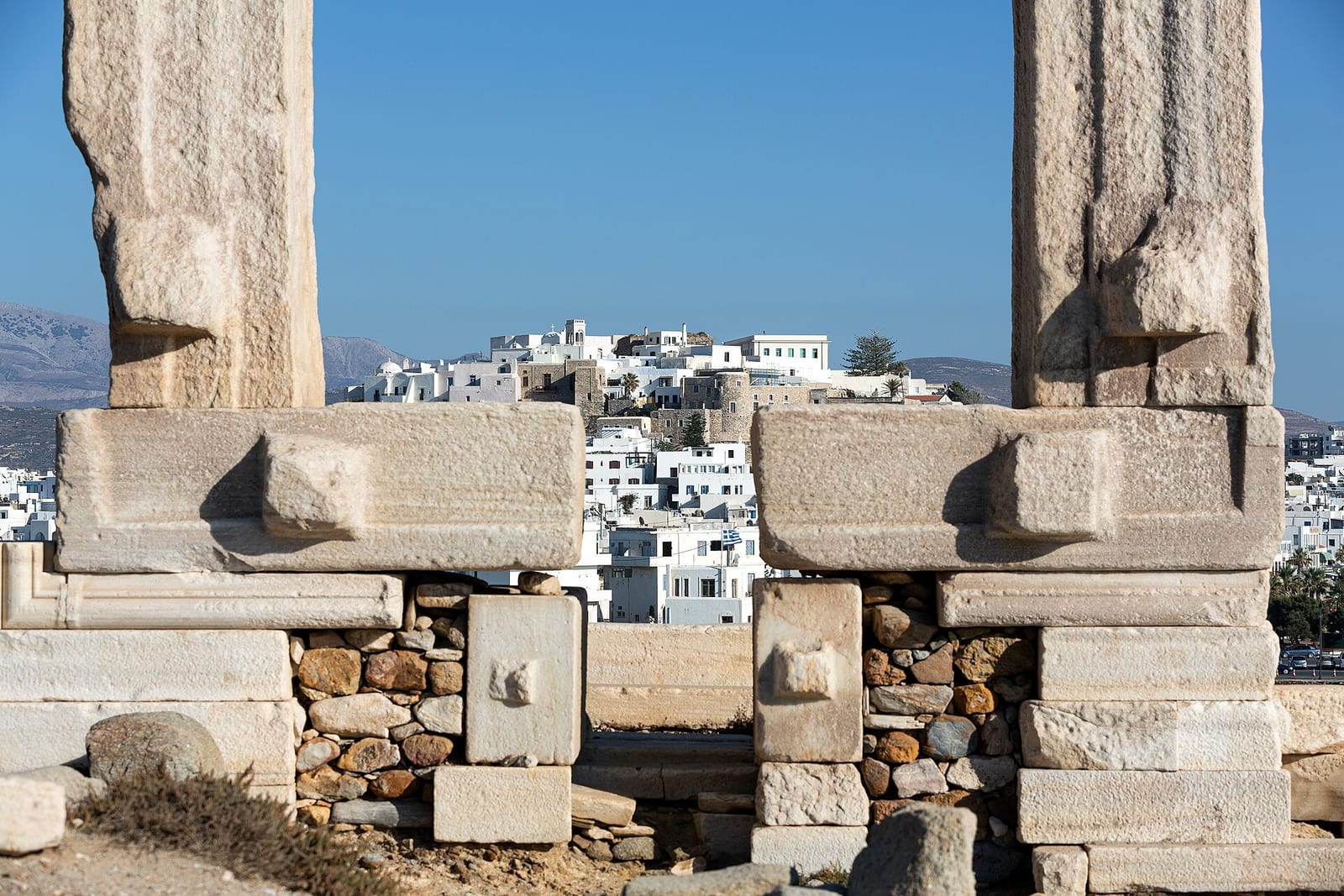
Naxos is the biggest and greenest island in the Cyclades, with a 1,000-metre peak, villages that still make cheese and citrus liqueur, and a long run of west-coast sand. The ferry quay is part of the old town, which makes it the easiest of the big islands to arrive on. It suits travellers who want beaches and walking without Mykonos prices.
- Main port
- Naxos Town (Chora)
- Recommended nights
- 3–4
- Best time to visit
- May, Jun, Jul, Sep, Oct
- Wind & disruption risk
- Low
Known for
- The Portara, the marble temple doorway on Palatia
- Plaka and Agios Prokopios beaches
- Apeiranthos, the marble mountain village
- Mount Zas, the highest peak in the Cyclades
- The abandoned kouros statues at Flerio and Apollonas
Getting there
Ferries tie up in Naxos Town itself, below the Venetian Kastro, so there is no port transfer at all: you step off the ramp and walk to your room. Piraeus is 3h 30m on the fast ferry or 5h 30m on the Blue Star, which is the better boat in wind. The Portara headland is a few minutes from the quay. Naxos has a small airport 3 km south of town, but it handles Athens flights only, not direct international arrivals.
When to go
Naxos has the widest window of the six, May through October, and the only low wind risk among them. It sits in the lee of Paros for the prevailing northerlies, so a meltemi day that strands people on Mykonos usually means nothing worse than a choppy hour here. July and August are hot and full, but the island absorbs crowds better than its neighbours. Late September and October give warm sea, open tavernas and much cheaper rooms.
Where to stay
Naxos Town is the obvious base: port, restaurants, old town, no car needed. Agios Prokopios and Agia Anna, 5 km south, put you on sand with buses every half hour. Plaka is quieter and longer, and better with wheels. Mikri Vigla is the windsurfing and kitesurfing end of the beach strip. For one night inland, Halki or Apeiranthos give you a mountain village with proper tavernas and almost no other visitors after dark.
Good to know
Buses leave from the square beside the port and serve the west-coast beaches often, but the mountain villages only a few times a day, which is not enough to explore inland. Rent a car for a day or two instead; the roads are good and slow. ATMs cluster in Naxos Town and Agios Prokopios, so carry cash for village tavernas and the roadside cheese and honey stalls. Distances are real here, and Apollonas is an hour each way.
Related itineraries
Frequently asked questions
How do I get from Athens to Naxos?
Ferries tie up in Naxos Town itself, below the Venetian Kastro, so there is no port transfer at all: you step off the ramp and walk to your room. Piraeus is 3h 30m on the fast ferry or 5h 30m on the Blue Star, which is the better boat in wind. The Portara headland is a few minutes from the quay. Naxos has a small airport 3 km south of town, but it handles Athens flights only, not direct international arrivals.
Recommended nights — Naxos?
Three to four nights, because half of Naxos is inland and needs a car day of its own. It is also the safest hub in the group: Paros is 30 minutes away with seven crossings a day, and Mykonos, Ios, Santorini and Amorgos all run daily. Same-day transfers from here carry little risk.
When to go — Naxos?
Naxos has the widest window of the six, May through October, and the only low wind risk among them. It sits in the lee of Paros for the prevailing northerlies, so a meltemi day that strands people on Mykonos usually means nothing worse than a choppy hour here. July and August are hot and full, but the island absorbs crowds better than its neighbours. Late September and October give warm sea, open tavernas and much cheaper rooms.
Times, prices and frequencies are indicative and change by season and operator. Always confirm the live timetable before you book.